
What Counts as a Meaningful Life
Serve the People!The novel contrasts official service, social advancement, family duty, erotic happiness, and historical sacrifice as competing measures of a worthwhile life.
increasing Bearing strength in each event
 decreasing
Bearing strength in each eventdecreasingThe Commander’s Measure
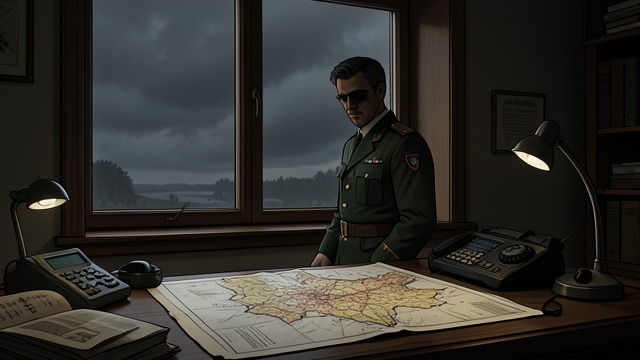
Work as Meaning
A life organized by history
The Commander measures his days against national struggles and revolutionary events. Work and service give his existence a public purpose.
A contrast established
Liu Lian’s isolated domestic life appears less meaningful by this measure, though the story later reveals her own sorrow and agency. The opening distinction is not the novel’s final judgment.
Wu Dawang’s Ambition
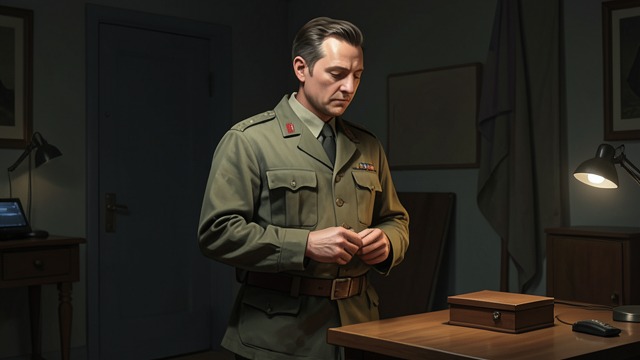
Meaning Through Advancement
A soldier’s goal
Wu Dawang wants honors, Party membership, promotion, and a city life for his family. He explains his ambitions through service but also wants security and status.
A practical ideal
His account suggests that people may pursue material improvement through the language of public virtue. The novel treats such motives as ordinary, not purely cynical.
Pleasure as Fulfillment

A Private Measure
Passion experienced
Wu Dawang believes that the intensity of sex with Liu Lian proves their feelings and gives his life a new dimension. Their intimacy seems to supply meaning absent from his marriage.
Fulfillment’s limits
The lovers’ retreat cannot last, and pleasure gives way to exhaustion and political danger. The novel refuses to treat personal happiness as either trivial or sufficient.
Service and Sacrifice Revisited
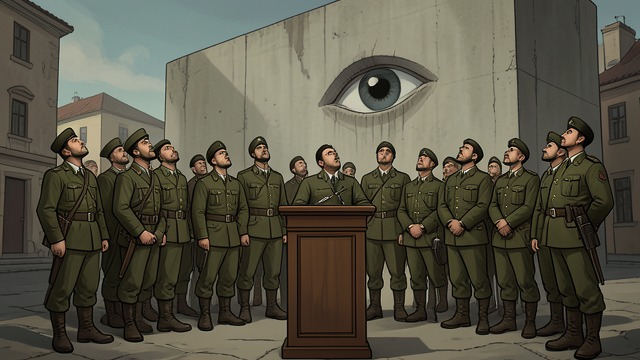
A Public Ethical Standard
Death and usefulness
The speech honoring Zhang Side argues that service to the people gives sacrifice significance and urges comrades to care for one another. Its terms are collective rather than personal.
A question of practice
The speech makes the division’s treatment of its soldiers and the Commander’s decisions open to moral scrutiny. Meaning depends on whom the institution actually serves.
A Face Changed by Time

Success and Melancholy
Material progress achieved
Wu Dawang has reached the city and entered middle age. The social transformation promised to him has taken place, but his face carries fatigue and resignation.
An incomplete answer
His return to Liu Lian shows that material advancement did not settle the question of what made life worthwhile. The story leaves memory, love, and public service in unresolved tension.
In the opening account of his daily life
During his early army career
During the affair’s middle weeks
In the closing speech
Fifteen years after the affair
